Be aware of financially significant birthdays that may impact your retirement strategy.

As you near retirement, there are certain birthdays that are considered financially important by the government because they allow you to save more, withdraw funds without penalty and access certain federal benefits.
As such, you may want to consider certain financial adjustments when you reach these milestone ages. We can help you track these financially significant birthdays and help determine the appropriate course of action you may want to take once you reach them.
Here are key retirement milestone birthdays that you should know:

| Catch-up contributions age To help those nearing retirement save more, the IRS has higher contribution limits for 401(k) plans and IRAs. Known as “catch-up contributions,” you can boost your retirement accounts with these extra funds beginning the year you turn 50. |

| The “rule of 55” withdrawal age If you leave your employer in the year you turn 55 or later, you can start taking penalty-free withdrawals from 401(k), 403(b) and profit-sharing plans. This only applies to withdrawals from plans you were contributing to at the time you left your job. HSA catch-up contribution age |
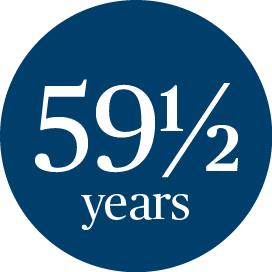 | Retirement account withdrawal age You can begin taking withdrawals from qualified retirement plans such as 401(k) plans and IRAs without incurring the 10% early-withdrawal penalty from the IRS. |
 | Social Security survivor benefits age |
 | “Super” catch-up contributions age Individuals who are 60 to 63 years old can make extra catch-up contributions to their 401(k), 403(b), 457(b), SIMPLE IRA and SIMPLE 401(k) plans. These “super” contributions are in addition to the catch-up contributions that begin at age 50. |
 | Early Social Security benefits age Age 62 is the earliest age at which you can collect Social Security; however, your monthly payment will be a reduced amount if you start taking your benefits at this time. Generally, you can expect to receive 70% of your Social Security benefits if you begin collecting Social Security at 62 years old, while waiting will lead to a larger payout. |
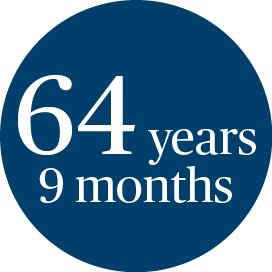 | Your 65th birthday is when you become eligible for Medicare coverage. You can begin enrolling for benefits in the three months leading up to your birthday, your birthday month, and for three months after it. It’s generally advisable to sign up for Medicare during this window, even if you already have health insurance through your job. If you don’t sign up for Medicare in a timely fashion, you risk being subject to penalties and permanently higher premium prices. |
 | Full Social Security benefits age At age 66 or 67, depending on your birth year, you are eligible to receive 100% of the Social Security benefits you are entitled to. However, you still have the option to wait to collect benefits for a bigger payout: Any delay in collecting Social Security benefits, up to age 70, can qualify you for increased benefits. |
 | Maximum Social Security benefits age At age 70, you are eligible to receive the maximum amount of Social Security benefits you are entitled to, which is around 124%. Waiting to claim Social Security beyond 70 years old will not increase your benefits, so if you haven’t yet collected Social Security, it’s advisable to start no later than your 70th birthday. |
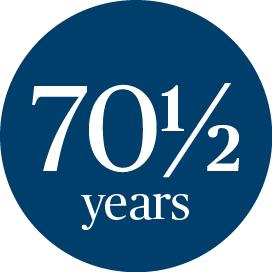 | Qualified charitable distributions age The age at which you may start taking qualified charitable distributions (QCDs), if eligible and appropriate. |
 | Required minimum distribution (RMD) age The age at which the IRS requires you to take RMDs from most retirement accounts depends on the year you were born. The current RMD age is 73. In 2033, the RMD age is set to increase to 75 for individuals born in 1960 or later. |
Social Security calculator
Use this calculator to estimate what your retirement benefit amount could be, and see how the age at which you begin to collect Social Security can affect your overall benefit amount.
Run the numbersKeep track of these retirement milestone ages
We can help you keep track of your financially significant retirement birthdays and identify strategies to help you reach your goals.