Inflation has come down from its peak, but it remains above the Federal Reserve's long-term target, which could keep interest rates higher for longer. That shift has implications across a broader portfolio, from how investors manage cash to how they balance income, risk and diversification.
In this higher-for-longer rate environment, fixed income may now play a more useful role in helping support your long-term financial goals. Here are four opportunities to consider as the Fed holds rates steady:
1. Look for income potential again
Higher rates today may again offer meaningful income across short-, intermediate- and long-term strategies. In fact, intermediate- and long-term bond yields are near two-decade highs. That changes the role bonds can play in long-term income planning. For retirees and those approaching retirement, today's yield environment may allow some investors to generate income with less risk-taking than what was often necessary during years of exceptionally low yields. Investors who need a steady income through retirement may have more room to use high-quality bonds as a core source of cash flow, in addition to other retirement income sources.
Price changes will still occur, but investors who hold bonds primarily for income may be less sensitive to short-term price fluctuations when the underlying investments continue to generate income.
2. Consider putting excess cash to work
Maintaining liquid cash reserves for emergencies and near-term spending needs remains important. However, holding too much cash for too long can limit long-term growth and income opportunities. While cash yields may look attractive now, they can fall quickly if the Federal Reserve eventually cuts rates.
Investors who may have accumulated large cash balances in savings vehicles, such as money markets, have several options in a high-rate environment. Depending on individual goals and time horizons, some of those assets may be better positioned in investments that can potentially provide higher income or more reliable long-term returns. Short- and intermediate-term bonds may help investors lock in today’s higher yields for longer.
3. Upgrade to higher quality bond investments
During the low-rate era, investors may have added riskier, lower-quality or more complex fixed income holdings to their portfolio in search of additional income or return potential. Today, quality pays more than it used to.
Many investment-grade corporate, U.S. Treasuries and municipal bonds now offer yields that are higher than those available just a few years ago. Higher yields from these high-quality fixed income investments may give some investors an opportunity to:
- Reduce risk and complexity in their fixed income allocation
- Improve overall portfolio quality
- Continue earning attractive income while staying aligned with their investment objectives
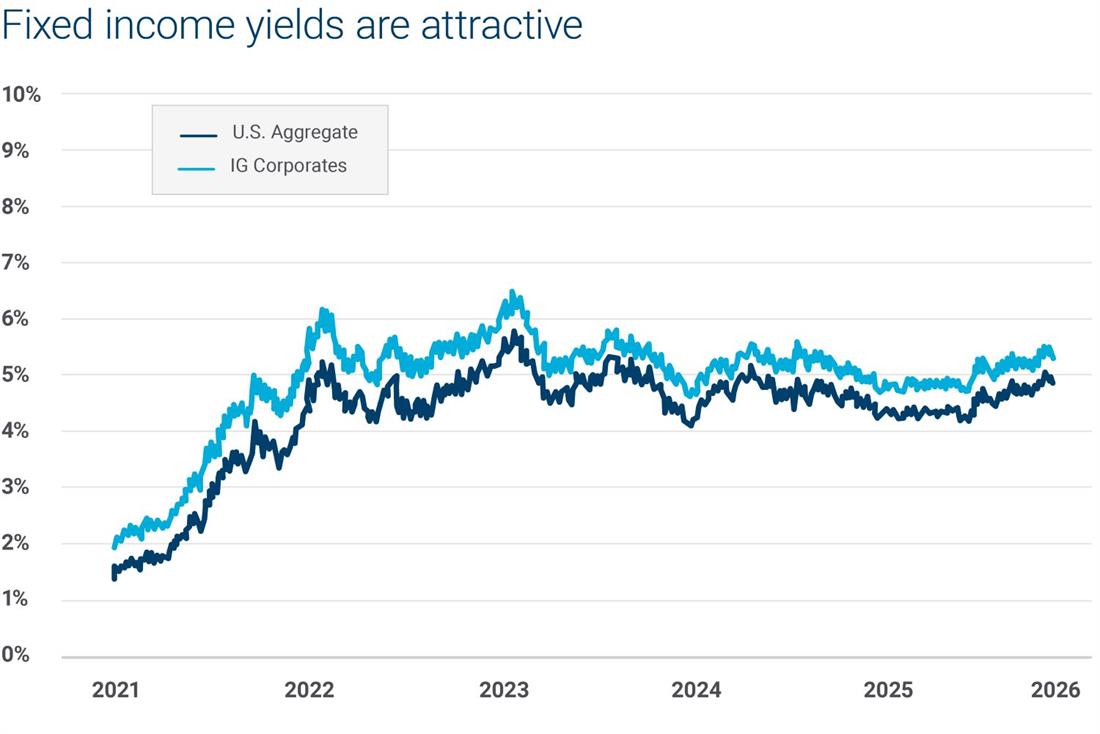
Source: Bloomberg L.P. Bloomberg US Aggregate Bond Index. This example is shown for illustrative purposes only and is not guaranteed. It is not possible to invest directly in an index. Past performance is not a guarantee of future results.
4. Continue to prioritize diversification
While rates are higher, uncertainty remains. Inflation, economic growth, government spending and central bank policy will continue to influence markets. At the same time, rising government debt and borrowing needs may keep upward pressure on long-term bond yields.
These factors reinforce the value of diversification across a broader portfolio and within fixed income. Depending on an investor’s goals and tax situation, a diversified bond allocation may include Treasuries, agencies, investment-grade corporate bonds, foreign bonds and municipal bonds. This approach can help manage risk, create multiple sources of return and provide greater confidence during periods of market volatility.
Bottom line
The higher-rate environment has created challenges, but it has also opened new opportunities for investors. Rather than waiting to see where interest rates may go next, investors should consider whether their financial strategy is positioned for today's reality. Reviewing cash and fixed income strategies may help strengthen long-term financial outcomes and keep investment decisions aligned with personal goals.
Put today’s opportunities to work
An Ameriprise financial advisor can help you assess your portfolio and identify ways to take advantage of today's higher-rate environment while staying focused on your long-term financial goals.